Do you have questions? We have answers. DRM
answers the most commonly asked questions related to data center decommissioning.
</div
Data center ITAD describes the process of systematically decommissioning and retiring IT assets from your live environment and ensuring they are disposed in a data safe, environmentally responsible manner. Retired IT assets are resold on behalf of the data center, redeployed to another company owned facility, or recycled.
</div
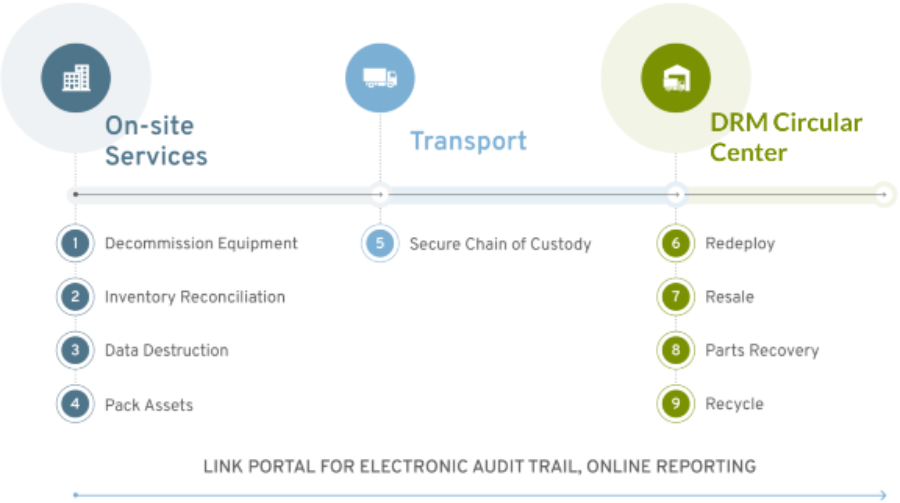
Equipment is decommissioned, inventoried and packed and shipped to an ITAD company that manages reuse and recycling of retired IT equipment. It is important that data-bearing assets are managed securely throughout the process. Most commonly, data is destroyed prior to assets leaving the data center.
Assets with reuse potential are refurbished and prepared for resale. If whole units cannot be reused, parts are recovered for resale. Obsolete equipment is recycled.
Most data centers require a documented audit trail that confirms how and when assets were disposed and that recycled equipment was managed in an environmentally compliant manner. ITAD companies can provide complete chain of custody reports, sales reports on assets sold, certificates of data destruction and environmental reporting for recycling. A disciplined approach to data center asset management is important on-site, during transport and off-site at the ITAD facility.
Data center managers want to recover a percentage of their investment from the sale of their retired equipment. It is also important to ensure regulatory requirements, internal risk management and data security policies are met.
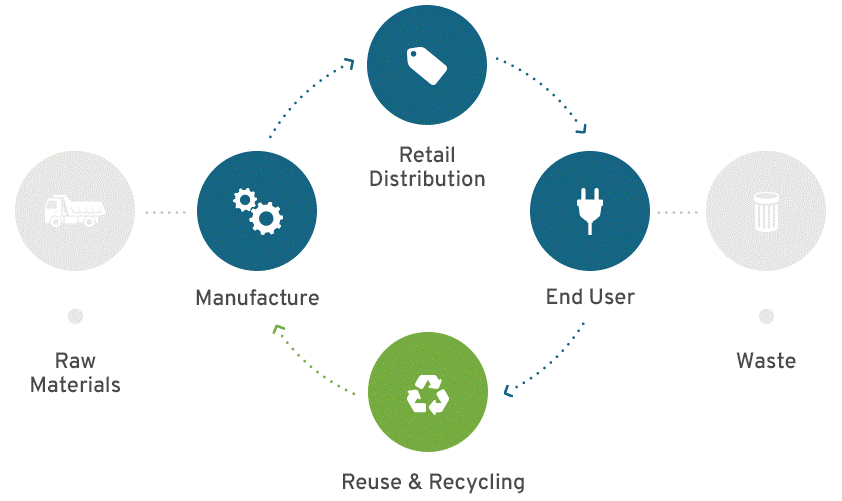
Resourceful reuse and recycling of data center equipment contributes to the broader shift toward a circular economy, decreasing the demand for resources required to produce new products and reducing landfill volumes.
Industry certifications are important in the ITAD and e-waste recycling industry. While industry certification does not guarantee performance, it provides a baseline of vetting to ensure your equipment is not irresponsibly handled. There are many reported cases of ITAD vendors taking shortcuts in processing used IT equipment. Shortcuts put you at risk of embarrassing headlines of data exposure and fines associated with illegal export and environmentally irresponsible disposal.
Most IT equipment can be reused or recycled. Depending on age and condition, whole units and parts can be resold. If no financial value can be recovered, equipment is recycled. Recycling recovers commodity materials that can be used as feedstock in manufacturing new products.
</div
Rack servers
Blade servers
Server racks
Blade server chassis
Routers
Ethernet switches
Application delivery controllers
Load balancing controllers
Network switch gear
Magnetic hard drives
Solid state hard drives
Backup tapes
Disk storage arrays
Storage area networks (SANs)
Network attached storage (NAS)
Direct attached storage (DAS)
Storage controller
Raid controller
Storage cabinets
Electric cables
Power cables
Cat 5/6 network cables
Power distribution units
Fans, heatsinks
Universal power supply (UPS)
Batteries
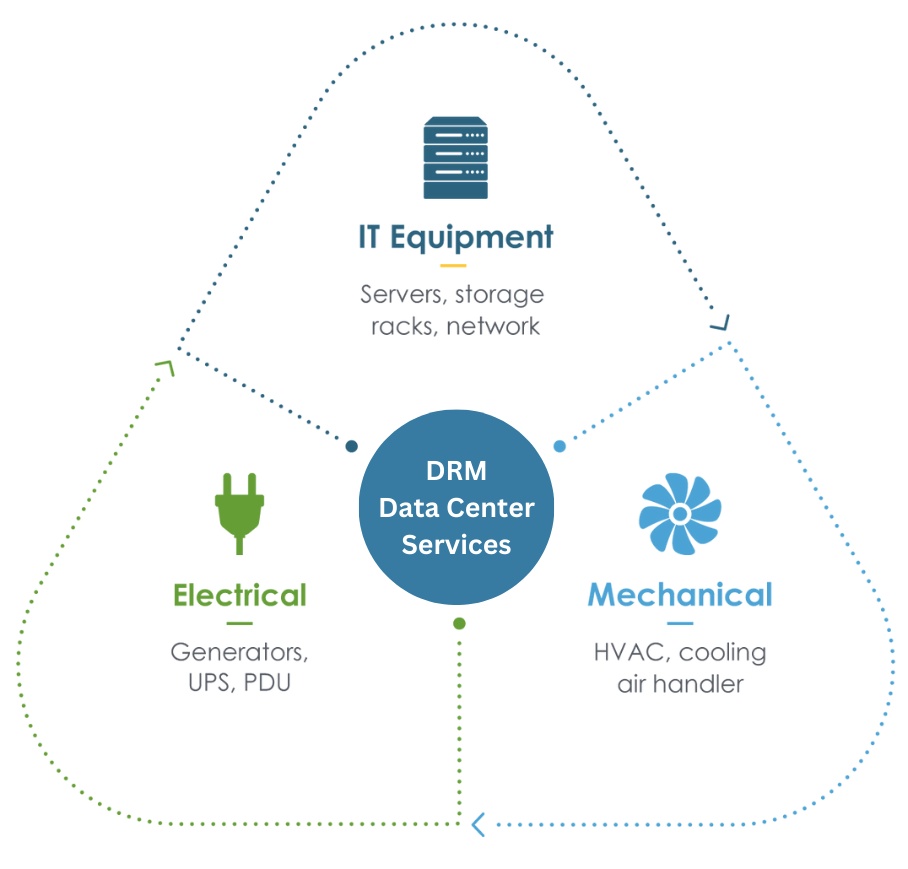
DRM works on many data center projects. We are unique in this industry in that we provide decommissioning and disposition solutions for IT equipment, electrical and mechanical systems.
DRM provides decommissioning and disposition services for IT equipment, decommissioning and recycling of electrical and mechanical systems. Our services are particularly useful for complete data center shutdowns and is popular when decommissioning edge data centers.
DRM handles the servers and blades, storage devices, networking and electrical equipment listed above. We also provide secure hard drive destruction services. All work is performed by field technicians and site personnel to coordinate heavy equipment movement.
</div
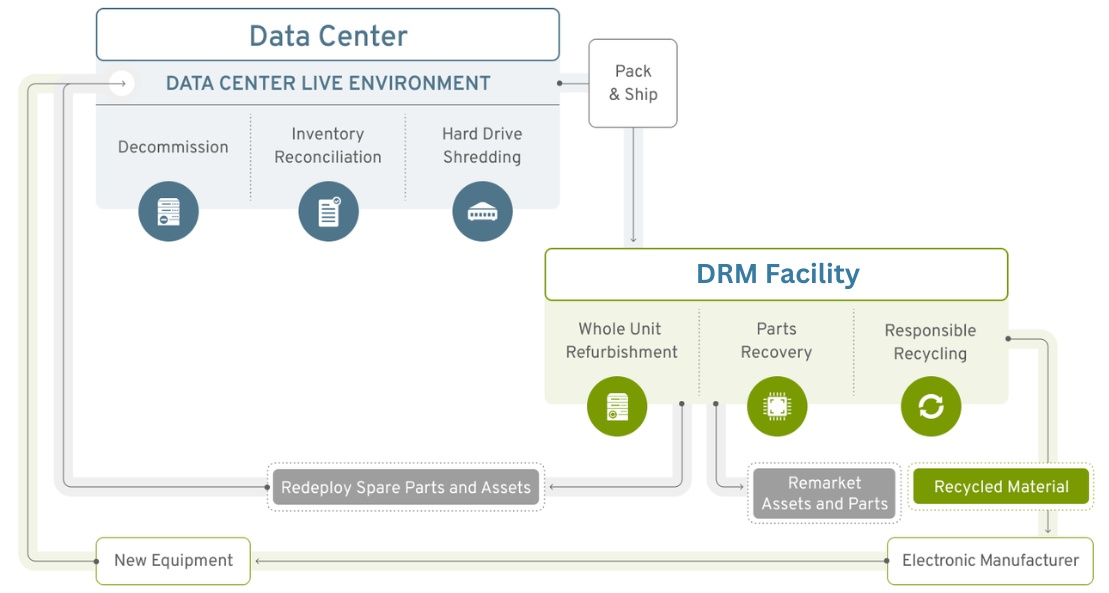
Ever wonder what happens to your used data center equipment after decommissioning? There’s an entire industry set up to recover value from used equipment and maximize resource recovery, either through reuse or responsible recycling. This industry is known as the IT asset disposition (ITAD) and e-waste recycling industry.
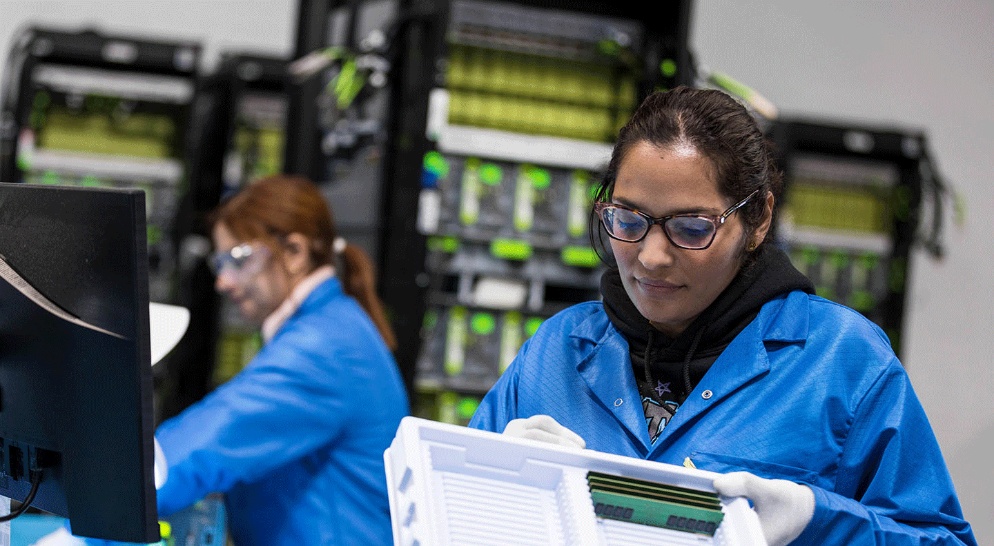
Equipment is shipped to an ITAD facility specializing in handling data center equipment. These processing facilities are set up to triage equipment systematically, destroy data and prepare equipment for reuse or recycling. Some ITAD facilities handle reuse and recycling. Other facilities handle reuse and will send obsolete hardware and e-waste to a separate facility for recycling. Most commonly housed in an industrial warehouse, there are areas within the ITAD facility dedicated to performing specific tasks. These sites have taken on added importance as companies seek to reduce their carbon impact. Reusing and recycling data center equipment contributes to the circular economy and improves financial results.
When received at the ITAD facility, an electronic inventory of assets is typically done and confirmed with your organization. At a minimum, asset make, model and serial number is captured. This information becomes part of an electronic chain of custody record to confirm secure and compliant handling of the IT assets.
Data is destroyed by data erasure, shredding, crushing or degaussing of storage media. As shown in the chart, data erasure allows secure reuse of storage devices. Magnetic hard drives and magnetic tapes, solid state drives and optical storage devices each require different data destruction methods. Certificates of Data Destruction (CODD) are provided by the vendor during the project. The CODD demonstrates compliance to corporate and regulatory requirements, including the General Data Protection Regulation (GDPR).
Data center equipment can be reconfigured and refurbished and then redeployed to another company owned data center. If whole units cannot be reused, spare part recovery can be a smart option to maintain legacy equipment. Redeployment of whole units and parts is a great way to conserve resources, save money and reduce the carbon impact of your IT ecosystem.
If there is no internal need for the decommissioned equipment, it can be resold on your behalf. Equipment condition and age of equipment is evaluated, to determine whether equipment will be reused or recycled. These behind-the-scenes activities help offset the cost of decommissioning, data destruction, shipping and reporting.
A parts recovery program provides an additional revenue source when assets cannot be sold as a whole unit.
Any equipment that is obsolete or beyond economical repair is recycled. The recycling process separates steel, plastic, aluminum, copper and precious metals from each other, which then allows for reuse of these commodities in next generation products.
Once resold, recycled or redeployed, reporting helps document an audit trail for the final disposition of all assets. Asset reporting should include detailed asset information, final disposition, pricing, and dates of significant activities. You should have the ability to receive data feeds or view online reports and be able to download .csv through a portal, which might include Certificates of Data Destruction, Certificates of Recycling and Certificates of Sustainability.
A successful project requires planning and cooperation between data center personnel and the decommissioning vendor. The pdf shown below serves as a checklist for things to consider to ensure your team is ready and selects a vendor that meets the needs of your data center.
Download this handy checklist pdf, which covers these topics:
You want to make sure your selected vendor is competent in the following areas:
</div
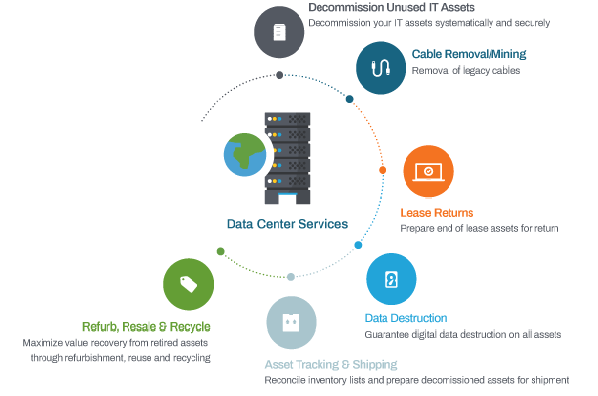
Too often, data centers depend on established vendors who currently provide adjacent services to also provide the decommissioning and final disposition of retired assets. An existing vendor will have the advantage of being familiar with your data center environment and the people on-site. The disadvantage may be that the decommissioning and disposition services may be outside their area of expertise.
At the start of a decommissioning project, the assumption is that any required data has been backed up, software licenses are accounted for, and cancellation of maintenance contracts has been completed. All equipment targeted for decommissioning should be powered down and disconnected from the network by data center employees.
Accurately identifying what equipment will be decommissioned is critical. Most data centers will provide the decommissioning vendor with a list of equipment to be decommissioned. The vendor will compare this list to a physical inventory count as equipment is removed from the live environment.
Know what your company’s policy is regarding how data bearing assets are managed. Have a plan for how decommissioned lease returns will be managed. Is there an area available for the vendor to work? They will need a secure staging area with internet access where they can perform inventory counts, data destruction (if done on-site) and prepare equipment for shipment.
</div
Model
Serial number
Server asset tag RFID
Device name
Equipment type
Estimated weight
Data center location (if multiple)
Grid location
Parent/child designations
Powered off
Network cables removed
Power cables disconnected
Data bearing device?
DRM is trusted across the globe to efficiently manage decommissioning projects and securely handle all data bearing IT assets.
SLS offers a detailed RFP template for scoping ITAD services.